The Zarloc Mountains: Difference between revisions
| Line 143: | Line 143: | ||
Months into the signing of the treaty, the Confederacy of Wilbur Crest came to learn that | Months into the signing of the treaty, the Confederacy of Wilbur Crest came to learn that | ||
Ursland's mining operation was misrepresenting the export | Ursland's mining operation was misrepresenting the discovery and export of gold mined in the mountains in order to dodge high tariffs. Further investigation revealed that the foreign laborers were concealing and smuggling the gold out through hidden compartments in supply wagons. | ||
The furry over the scandal swept through all of the mountains and ultimately led the Confederacy to expel Ursland's mining operation altogether from the Zarloc territories. | The furry over the scandal swept through all of the mountains and ultimately led the Confederacy to expel Ursland's mining operation altogether from the Zarloc territories. | ||
Revision as of 23:57, 21 February 2013
| The Zarloc Mountains | |
|---|---|
|
File:Zarloc Mountains.jpg View of highest peaks within the range | |
| Geographical Information | |
| Location: |
The United Tszamoorian Empire The Ring of Fire |
| Geographical Features: | Glaciers |
| Significant Resources: |
Freshwater reserves (frozen) Gold Iron Coal Trees (lumbar) |
| Dangers: |
Exposure Rock slides Altitude Sickness Fires Snow Blindness Falls Avalanches Ice Storms Starvation |
| Notable Wildlife: |
Golden Eagles Appenzell Goat Various Cryptids |
| Civilization | |
| Colonized By: | Ursland |
| Notable Settlements: |
Wilbur Crest Tahom Valley Xzenz |
| Inhabitants: |
Human Orc (workers) Dwarf (workers) |
| Common Languages: |
Common Various indigenous |
| Population: | 25,000 |

Located on the West to Northwest facing mountain range of Tszamoore, the Zarloc Mountains are host to the highest mountain peaks in the region. 85% of this range lies above the timberline and is primarily rich in gold deposits.
Geography
The Zarloc Mountains are host to some of the highest peaks found in North-Western Veth, especially those upon the Northern Peninsula. The highest peak, Mount Zah, is 26,000 ft in elevation.
Habitable conditions are all mostly found under the timberline, which makes up only 25% of the land within the mountains. Of that, arable land only makes up 1% of the total land within the Zarloc Mountains, which again is only in use seasonally. Numerous mountain passes and remote basins can be found throughout the range.
Glaciers and Lakes
Much of the mountain range above 15,000 feet retains glacial ice year-round, accumulating it faster than fallen snow melts. As summer approaches, conditions will warm enough in the higher elevations to begin to melt the glacial ice into a vast collection of river networks that travel down ravines and stream-cut troughs that have formed through erosion. These river networks eventually trickle down into the other territories of the Empire, such as The Great Bat Tree Bowl as well as into The Sawtooth Territories and the Timberland Province. It is these omniscient glacial deposits that feed and irrigate all of the immediate areas surrounding the choke of Veth.
Onyx Lake
Main Article: Onyx Lake
The Onyx Lake, also known as "The Lake of the Dead," is a Soda Lake that is high in salinity to the point where it never freezes. Because of this, there is a unique blend of lifeforms that exist within the small lake due to its high alkalinity. The lake remains a geographical phenomenon due to the fact that it lies within a salt-laden bowl surrounded by bedrock that apparently does not affect plant growth in the surrounding area. It remains inexplicable as to how the salt basin formed on the mountain side.
Climate
The climate of the Zarloc Mountains varies greatly depending on elevation. At the higher peaks, conditions are very unforgiving and temperatures can plunge rapidly at night into the -50s with wind gusts often increasing the intensity of the cold felt. Daytime highs within the peaks are meager, rarely reaching much above freezing year-round. Solar radiation in the summer helps to melt glacial ice, which feeds river networks throughout the Empire and all of its territories.
Peaks
Climates at Peak-level, or just above the timberline, are harsh and are generally chalked up to being Polar Climates. On average, temperatures rarely reach above freezing for more than two months. Of those two months, the majority of flooding at lower elevations takes place in summer; though settlements higher in elevation than those within The Great Bat Tree Bowl are afflicted by these conditions.
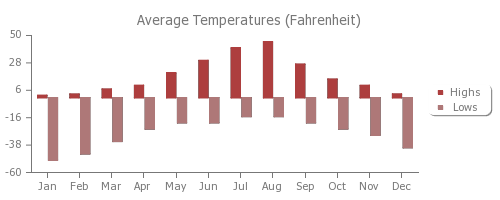
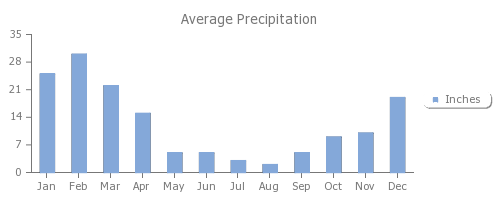
At the higher elevations, winds can reach up to 150 mph, often sweeping snow from the peaks and dusting glaciers and other areas at below. These winds have claimed numerous lives on higher mountain passes where treacherous roads wind along the sides of cliffs. Gusts have been known to sweep a many travelers and climbers off to their deaths.
Wilbur Crest
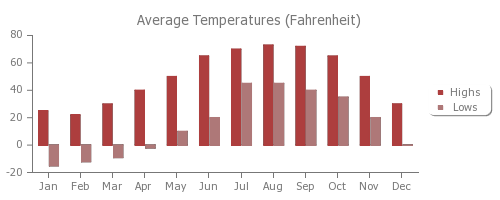
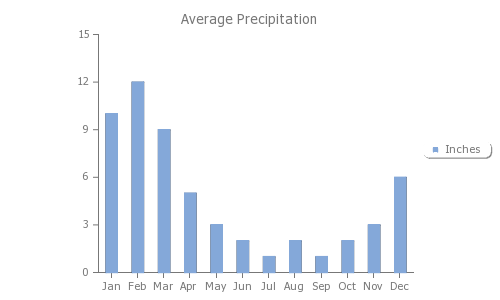
Considered much more habitable at an elevation of 8,500 ft, Wilbur Crest's climate is less severe than at higher ranges where precipitation and colder atmospheric temperatures create miserable conditions.
History
Early prospecting efforts and promising gains of mineral rich-ore laden with gold led to many inhabitants of Ursland to relocate to the mountainous region. Word spread rapidly, leading to a Gold Rush that easily outweighed a potential future in agriculture for residents of The Great Bat Tree Bowl. The initial migration was sizable and just cause for a de facto system of government to be established in Wilbur Crest. Satellite cities that appeared within the mountains also formed local governments that oversaw mining operations as well as the isolated societies that settled.
Initial Government; The Zarloc Confederacy
The initial government formed from locals and settlers within Wilbur Crest as well as its satellite cities was based on a system of Confederate Rule that took mining operations and security into a unified set of principles ratified in a treaty of independence. The connected cities and territories therein laid claim to vast swaths of land that new settlers would essentially be required to purchase in order to own. Only land owners could participate in government, thus stymieing any fears that a vast migration could turn over control of the mountains to Ursland. As such, Wilbur Crest and its satellite cities became a Timocracy for a brief period before wealth from gold deposits quickly shifted politics towards a Plutocracy.
Imperial Involvement
| File:Flagoftheempire.jpg The flag of the United Tszamoorian Empire |

After a steady stream of reports from the mountains that Wilbur Crest was becoming a vast and growing entity due to gold-wealth had become cause for Ursland's rulers to turn their sights towards the mining industry in that particular region. It wouldn't take Tszamoore long before it began to establish a "foreign" mining operation fully-funded by Ursland just north of Wilbur Crest. The influx of laborers and outpouring of gold to other sources, however, led the leaders of Wilbur Crest's Confederacy to force Tsazmoore into signing a trade-agreement, where their exportation of gold came at a price in taxation based on output at incremental levels. Ursland's leaders agreed and ratified the contract.
Tariff Scandal and Embezzlement Charges
Months into the signing of the treaty, the Confederacy of Wilbur Crest came to learn that Ursland's mining operation was misrepresenting the discovery and export of gold mined in the mountains in order to dodge high tariffs. Further investigation revealed that the foreign laborers were concealing and smuggling the gold out through hidden compartments in supply wagons.
The furry over the scandal swept through all of the mountains and ultimately led the Confederacy to expel Ursland's mining operation altogether from the Zarloc territories.
Tariff War
Immediately following the expulsion of its mining operation from the Zarloc Mountains, Ursland imposed an embargo on Wilbur Crest in their attempts to stop all import of lumbar and agricultural goods into the region. Smuggling and border crossing routinely became prevalent, prompting Ursland to respond with a complete blockade to prevent gold from even moving out of the Confederate territories.
By this time, Ursland's sights had been completely diverted away from its original plans for invasion and subsequent reclaiming of The Southlands, which border Zul Kiras. With a military established and already equipped for war with United Clans, King Taltian Kurleiser had his generals concentrate on the blockade efforts.
Preparation for Invasion
In all, it took the Zarloc Confederacy four months before I began negotiations with Ursland. At the end of a tireless effort to reach a truce, Wilbur Crest ultimately signed an agreement that would allow Ursland to continue mining operations in the area with little taxation in return for the security of its exports as well as using its lands to transport the gold to sea.
At the same time, however, Ursland was planning a full-scale invasion of the Zarloc Confederacy. Behind the scenes, calvary forces were converted to unmounted units and the whole of the Tszamoorian Military were restructured and retrained for Mountain Warfare. Training exercises and a build-up of forces would prelude the designs of Ursland as the new trade agreement signed by the Confederacy cooled tensions to the point of giving Tszamoore the element of complete surprise.
Midnight Moon
Ahead of invasion efforts, however, two Headsmen units deployed covertly with assassination orders for all of Wilbur Crest's military and governing rulers. A military operation coordinated and dubbed, "Midnight Moon," was this exact draft of orders.
The plan took two weeks of reconnaissance missions, some of which required members of the Headsmen to infiltrate and blend in with the civilian population of Wilbur Crest. The soldiers were tasked with identifying all of the major leaders, both civilian and military, and plotting their assassinations in a coordinated manner. The two units then converged and executed a series of attacks in one night designed to kill all of Wilbur Crest's central leadership. All of the targets except for the leader of the border guard were killed within their homes.
Military Invasion
The night of the "Midnight Moon" operation, infantry units began to mobilize in its invasion efforts that aimed to take Wilbur Crest and its satellite cities. The invasion efforts were stalled, however, when an ice storm set back troop movement and offered the armed citizens of Wilbur Crest to disburse into defensive positions throughout the higher elevations of the range. Booby traps were set all over the city of Wilbur Crest and dynamite was placed to knock out inroads and trigger avalanches that would crush and thwart the invading forces as they attempted to ascend to the city.
The struggle delayed and harassed the invading front, but counter-insurgency action on behalf of the Headsmen would run off the remaining saboteurs. Three weeks into the initial invasion efforts, the Tszamoorian Military would make landing at Wilbur Crest, quickly taking the city under its control.
Ground operations then spilled over into the surrounding satellite cities, which were taken with initial resistance, but at the cost of very few casualties.
Installation of a New Government
The Military quickly installed a new ruling Governor in Wilbur Crest that would remain loyal to Ursland's policies. The population was rapidly humbled through occupation as well as increased security and resources brought in to aid mining operations. Transition of power and the subsequent occupation saw little resistance for decades and living conditions improved under the Empire. Additionally, those that profited locally from gold mining were targeted for assassination prior to the initial invasion, thus most of the remaining population saw little change in wealth distribution.
Dirth Kurleiser's Rule
Under King Dirth Kurleiser, the costs of maintaining such an expansive military that was being stretched thin were becoming a growing concern. To combat the financial burden, the King imposed high tariffs on mineral exports as well as agricultural imports into the Zarloc Mountains. An already strained society of people grew even more impatient with Urlsand through the taxation and a resistance movement began to emerge. Small-scale sabotage of mining operations as well as of The Imperial Highway was cause for the Tszamoorian Military to clamp down harder and restrict freedom of movement.
The Coup of Heights
Main Article: The Coup of Heights
As the resistance built more and more momentum with military clamp-downs and exhaustive taxation, the Headsmen unit native to Wilbur Crest, The Shadowmen, were lured into taking part in a plot to overthrow King Dirth Kurleiser and restore negotiations with Ursland towards independence for the Zarloc Mountains.
The Coup, however, dubbed "The Coup of Heights," was disastrous and failed in any of its objectives. The Shadowmen were seized and summarily executed along with resistance members who took part.
Wilbur Crest
| File:Wilbur.jpg Wilbur Crest at Night |

Wilbur Crest is the capital city of the Zarloc Mountains and is host to the Governor as well as all managerial oversight of mining operations throughout this particular mountain range. With a sizable population of 5,000 permanent residents, much of Wilbur Crest's greater headcount of 15,000 is made up of labor camps, mining trains, and military personnel.
The city is located at approximately 8,500 ft in elevation, leaving it just at the cusp of the timberline.
Much of the goods used and traded, especially agricultural goods, are imported from The Great Bat Tree Bowl while gold exports flow out. The economy of Wilbur Crest had flourished prior to Imperial Invasion, where many of the gold exports made early settlers into rich aristocrats nearly overnight. Since occupation and the subsequent incorporation into the Empire, Wilbur Crest's wealth has mostly divided itself up into paying for military operations in the area and supplementing costs elsewhere within Tszamoore.
Mining Operations
Pillar Mines can be found throughout the range, often dug out by foreign Orcish workers and cleared out initially by Dwarven blasters. Mining operations are the number one employ of foreign workers within the region, whereas the Tszamoorian Military is the number one employer of citizens and some locals. The two occupations, however, work hand in hand as the military oversees mining operations for security purposes and to prevent delays through sabotage.